CREATINE

Creatine gummies: what the lab testing actually found

Nearly half the creatine gummies sent to an accredited lab failed to meet their own label claim. Some contained essentially none. Here is the test data, the brands that passed, and why we still point most people to powder.

Jump to the ranking
An athlete performing a controlled dumbbell exercise

Last reviewed September 2026 · Next review December 2026

We earn a commission on some links, at no cost to you. It does not change our rankings. How we rank →

The short answer

  • The category has a verification problem: In NOW Foods' HPLC testing of 12 creatine gummies, six failed to meet label claim, a 46 percent failure rate. In separate testing of six Amazon best-sellers, four contained essentially no creatine at all.
  • Only buy one with batch-level HPLC results: Brands that met label claim in NOW's testing: Bear Balanced, Bod, Effective Nutra, Iron Labs Nutrition, Peach Perfect, and Zhou.
  • The honest recommendation: creatine monohydrate powder. It costs a fraction as much per gram, it is chemically stable, and its evidence base is among the strongest of any supplement.

What we checked

We reviewed published independent laboratory testing of creatine gummies from NOW Foods' testing program and from an independent analysis commissioned by SuppCo, cross-referenced the brands that passed, examined the chemistry of why gummies struggle with this ingredient, and reviewed active litigation over label claims. We did not rank on customer reviews in this category, for reasons the data makes obvious. How we rank →

The honest caveat

This is the one category where we tell most readers not to buy the gummy.

The chemistry is against it. Creatine is stable as a dry powder and unstable the moment it meets water and heat. It converts to creatinine, a waste product with no performance benefit. A gummy is made with water, under heat, and then sits at room temperature for months. That is close to a worst-case container for this molecule.

NOW Foods tested 12 creatine gummies by HPLC against a known creatine reference standard. Six failed to meet label claim, a 46 percent failure rate. Products that failed were also tested for creatinine, and several contained significant amounts, indicating the creatine had already degraded inside the bottle.

An independent ISO 17025 lab, commissioned by SuppCo, tested six of Amazon's best-selling creatine gummies. Four contained essentially no creatine. Those products carried Amazon ratings between 4.4 and 4.7 stars.

Individual reported results include a product claiming 5 g per serving found to contain 0.0087 g per gummy, and another claiming 250 mg of creatine HCl found to contain 28.3 mg. One analysis found a gummy claiming 1.5 g per piece containing under 0.1 g, meaning 50 or more gummies would be needed for a 5 g dose.

Litigation is active. A false-advertising suit was filed in 2026 against one creatine gummy maker after independent testing found the product contained roughly 10 to 20 percent less creatine than advertised, and class action attorneys are investigating several other brands.

There is a second finding buried in the NOW report that deserves more attention than it got. When NOW followed its usual practice of having a reputable outside lab run the same samples in parallel, it could not find a third-party lab capable of accurately testing gummies. That means even a brand that genuinely wants to verify its gummy may struggle to find someone who can.

Why this matters beyond creatine. Creatine is the clearest case because the degradation product is measurable and the chemistry is well understood. But the underlying problem, that a water-based, heat-processed, room-temperature-stable candy is a difficult vehicle for a precise dose of an active ingredient, applies across this entire market. Creatine is where it shows up most visibly.

If you are buying a creatine gummy anyway: some people will not take powder. That is a real constraint and worth serving rather than lecturing about. If you are buying a gummy, the rule is simple: buy only from a brand that publishes batch-level HPLC results for the finished product, not a certificate for the raw powder before it went in.

Brands that met label claim in NOW Foods' HPLC testing: Bear Balanced, Bod, Effective Nutra, Iron Labs Nutrition, Peach Perfect, Zhou.

Brands that failed to meet label claim in that same round: Astro Labs, Beast Bites, Create, Con-Cret, Greabby, Njord.

Con-Cret's parent company, Vireo Systems, disputes this result. It says it has tested its creatine HCl gummy in at least two trials at an independent ISO/IEC 17025:2017-accredited laboratory, that those trials showed creatine HCl content above the 250 mg per 4 g label claim, and that CVS Caremark ran its own testing programme before accepting the product for retail. We are publishing both the NOW Foods result and Vireo's response because a reader deciding what to buy should have both.

Independent testing is also a snapshot of the batches tested, not a permanent verdict on a brand. Any of these results can change when a manufacturer reformulates or publishes new batch data, which is one reason we re-check this page every 90 days.

Answer nine questions and we will tell you whether this is the right category for you.

Take the quiz →

The recommended format

The right answer for almost everyone

The recommended formatPOWDER
95
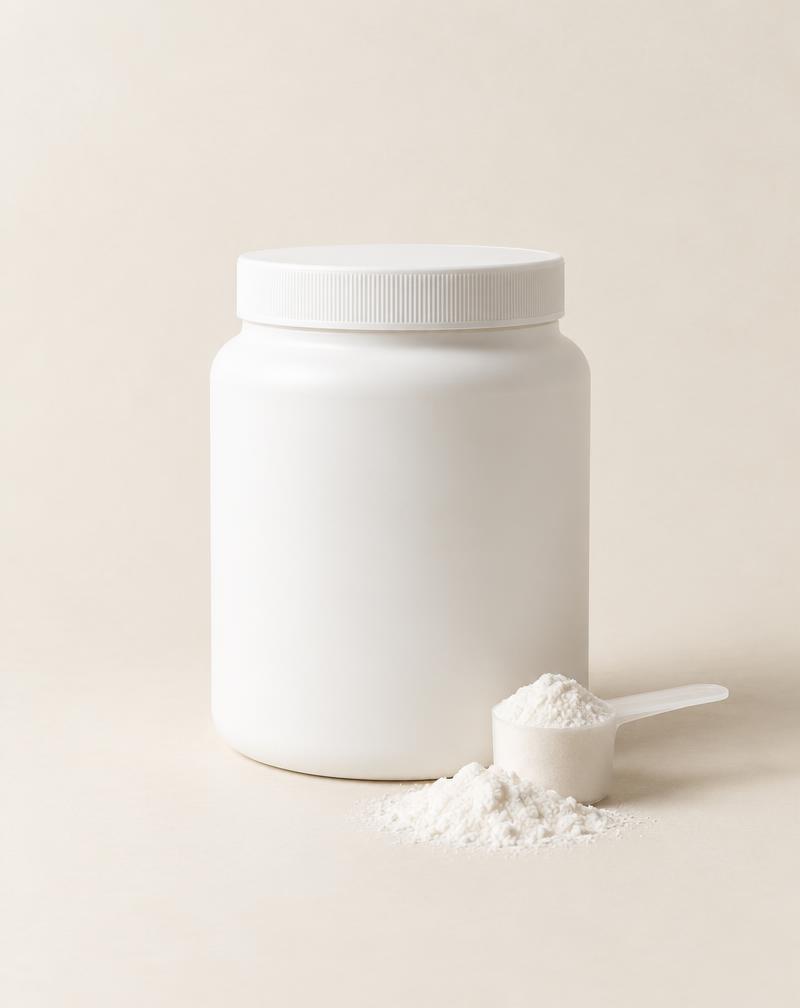
ScreenedCreatine monohydrate powder (the honest alternative) studio photograph

No brand

Creatine monohydrate powder (the honest alternative)

not a gummy, and it is the right answer for almost everyone reading this page.

FormatPowder, mixed with water or juice
Certification to look forCreapure, NSF Certified for Sport, or Informed Sport

What people like most

  • Chemically stable as a dry powder, which is the entire problem gummies have.
  • Creatine monohydrate is one of the most studied supplements in existence, with strong evidence for strength, power output, and lean mass, and growing research in cognition and in older adults.
  • Cost per day at the label's stated use is a small fraction of any gummy.
  • Look for Creapure, or NSF Certified for Sport or Informed Sport certification, and the verification question is solved.

What people might not like

  • You have to mix it, which is the real reason gummies exist.
  • Slightly gritty in cold water. Warm water or juice fixes it.
  • Some people experience mild bloating in the first week, which usually resolves and is less common without a loading phase.
  • Unflavored powder tastes faintly chalky, which most people stop noticing quickly.

Score breakdown

Each bar shows points earned out of that component’s weight in the 100-point Supergummies Score.

Sentiment33/35
Verification24/25
Formulation20/20
Livability8/10
Value10/10

The ranking

If you will not use powder

Score / 100

Best overallGUMMY
72
ScreenedBear Balanced Creatine Gummies studio photograph
Bear Balanced

Bear Balanced Creatine Gummies

met label claim in independent HPLC testing, which in this category is the entire basis for a recommendation.

TestingMet label claim in NOW Foods' HPLC testing
Read the Bear Balanced brand profile →

What people like most

  • It passed. In a category with a documented 46 percent failure rate, meeting label claim in independent testing is the only thing that matters.
  • No powder, no shaker, no clumping in the bottom of a bottle, which is the whole reason people want this format.
  • Portable, and easy to keep consistent with while traveling, which is where a lot of creatine routines break down.
  • Palatable enough for daily use, which matters over the months creatine requires to saturate and maintain.

What people might not like

  • Cost per gram of creatine is many times that of monohydrate powder. This is the fundamental trade of the format.
  • Reaching a standard 5 g daily dose requires a meaningful number of gummies and a meaningful amount of sugar.
  • Testing is a snapshot in time, not an ongoing certification. Batch-level results published on a rolling basis are what you actually want.
  • Creatine degrades in the gummy matrix over shelf life, so an older bottle may not match a freshly tested one.

Score breakdown

Each bar shows points earned out of that component’s weight in the 100-point Supergummies Score.

Sentiment0/35
Verification18/25
Formulation12/20
Livability8/10
Value3/10
Runner-up 1GUMMY
70
ScreenedEffective Nutra Creatine Gummies studio photograph
Effective Nutra

Effective Nutra Creatine Gummies

also met label claim in the same HPLC round. A reasonable second option on the same basis.

TestingMet label claim in NOW Foods' HPLC testing
Read the Effective Nutra brand profile →

What people like most

  • Passed independent HPLC testing against label claim.
  • Straightforward labeling, without the creatine HCl and proprietary-blend complexity that has caused problems elsewhere in the category.
  • Convenience, which is the only reason to consider this format at all.
  • Available through mainstream retail channels.

What people might not like

  • Same cost problem. Powder is dramatically cheaper per gram.
  • Same shelf-stability question, since a single test round does not guarantee ongoing quality.
  • Sugar load at a full daily dose.
  • The published testing is a third party's, not an ongoing certification program.

Score breakdown

Each bar shows points earned out of that component’s weight in the 100-point Supergummies Score.

Sentiment0/35
Verification17/25
Formulation12/20
Livability8/10
Value3/10

How to choose

Demand finished-product testing, not raw-material testing.

A COA for the creatine powder before it entered the gummy tells you nothing about the problem. The degradation happens during and after manufacture.

Ask whether creatinine was measured.

A brand confident in its product will test for the degradation product, not just the active. Its absence is the real proof.

Check the date on the testing.

A single test from two years ago is marketing. Rolling batch-level results are verification.

Do the arithmetic on cost per 5 grams.

Then compare to a tub of monohydrate. The number is usually startling.

Be skeptical of very small serving sizes.

A gummy claiming a meaningful creatine dose in one small piece is claiming something physically difficult. NOW's testers noted that several bear-shaped products across different brands appeared to come from the same supplier, with different colors and different potencies.

Who should skip these

  • Anyone with kidney disease or reduced kidney function, without clinician clearance. Creatine raises serum creatinine, which can also confuse kidney function testing even in healthy people, so tell your doctor you take it.
  • Anyone under 18, without pediatric guidance.
  • Anyone pregnant or nursing, where evidence is limited.
  • Anyone taking nephrotoxic medication.

Questions

A creatine gummy that actually contains creatine works, because creatine works. The problem is that independent testing has repeatedly found that many of them do not contain it.

Related

Sources

  • NOW Foods creatine gummy HPLC testing program, reported in Nutraceuticals World and Nutritional Outlook
  • SuppCo independent lab analysis of six best-selling creatine gummies
  • Men's Fitness, reporting on false-advertising litigation over creatine gummy label claims
  • Published creatine and creatinine stability data